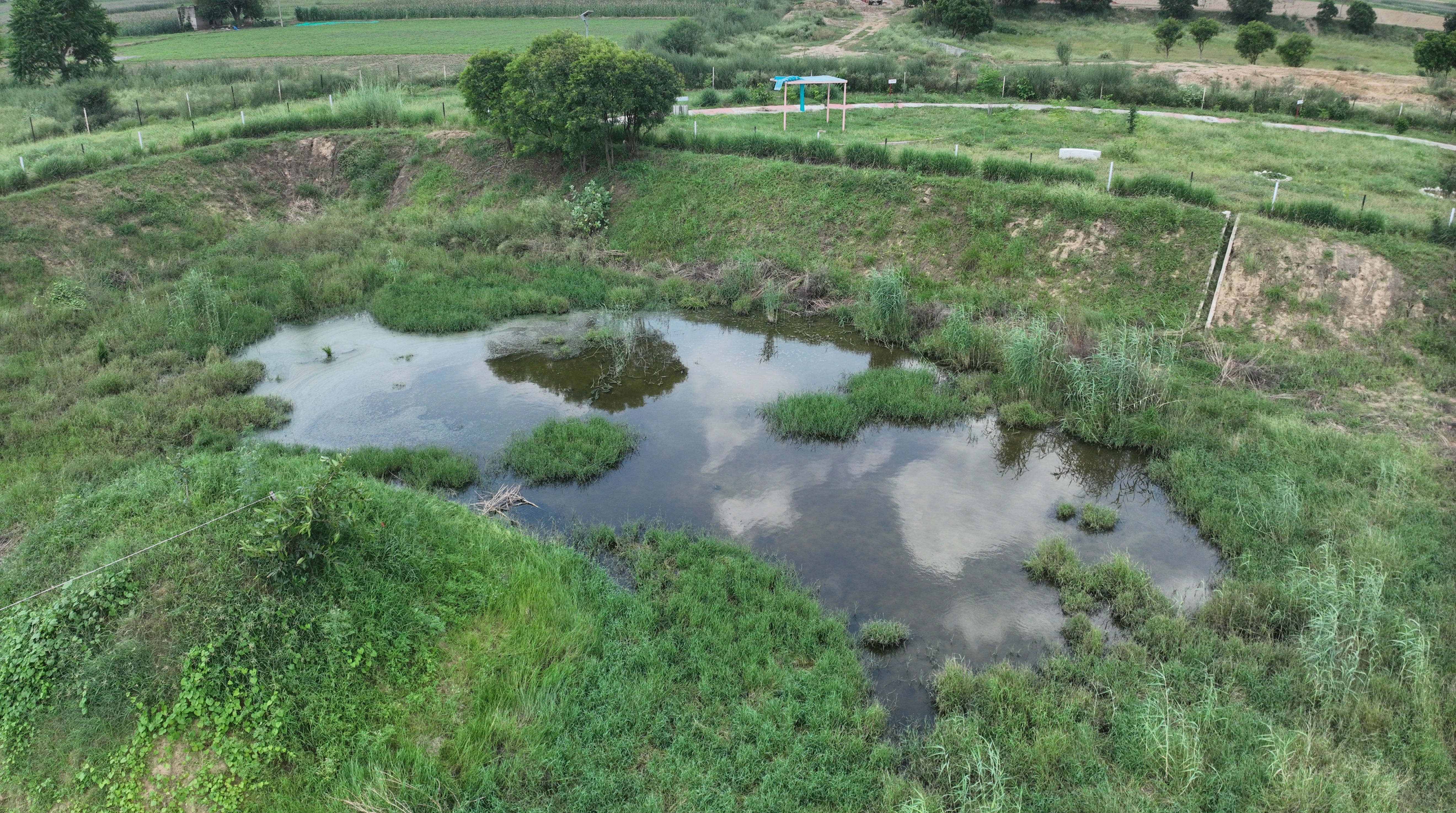
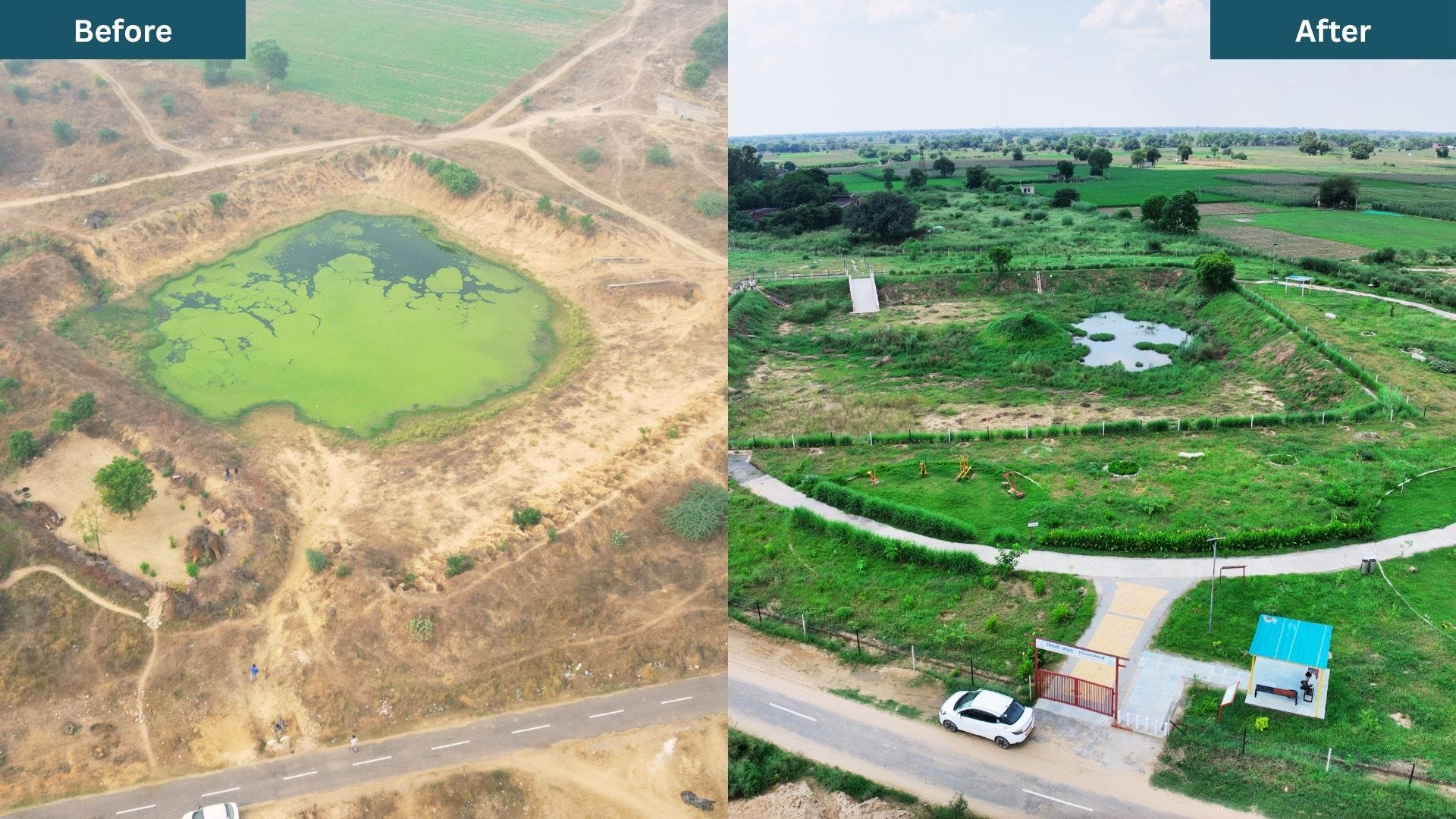
There is a pond on the edge of a small Haryana village that people once crossed the road to avoid. Choked with algae, fed only by untreated household wastewater, it had stopped being water and become a wound on the landscape. Today, the same pond draws over a hundred villagers every evening — walking, laughing, watching their children play on grass that didn’t exist a few years ago. This is what water restoration actually looks like when it works: not a construction project, but a village falling back in love with its own water.
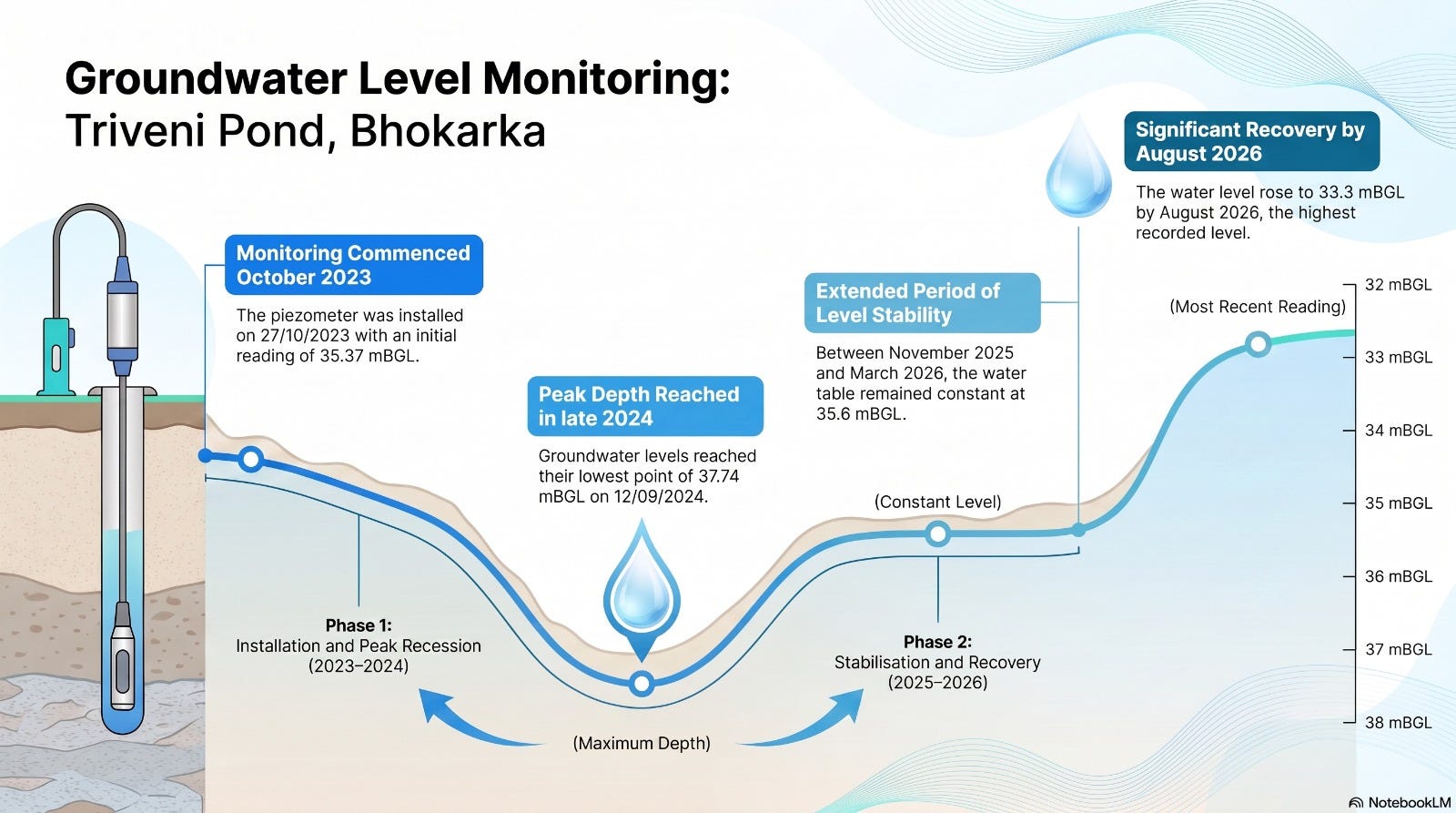
The Water Beneath Our Feet
Groundwater doesn’t announce itself. It rises quietly, metre by metre, unseen — which is exactly why its recovery deserves to be counted. At this site, an automatic water-level recorder tracked the aquifer climbing by 2.2 metres in a single season. In a region where the water table has historically fallen by half a metre to a metre every year, a rise like this is not a rounding error — it’s a reversal
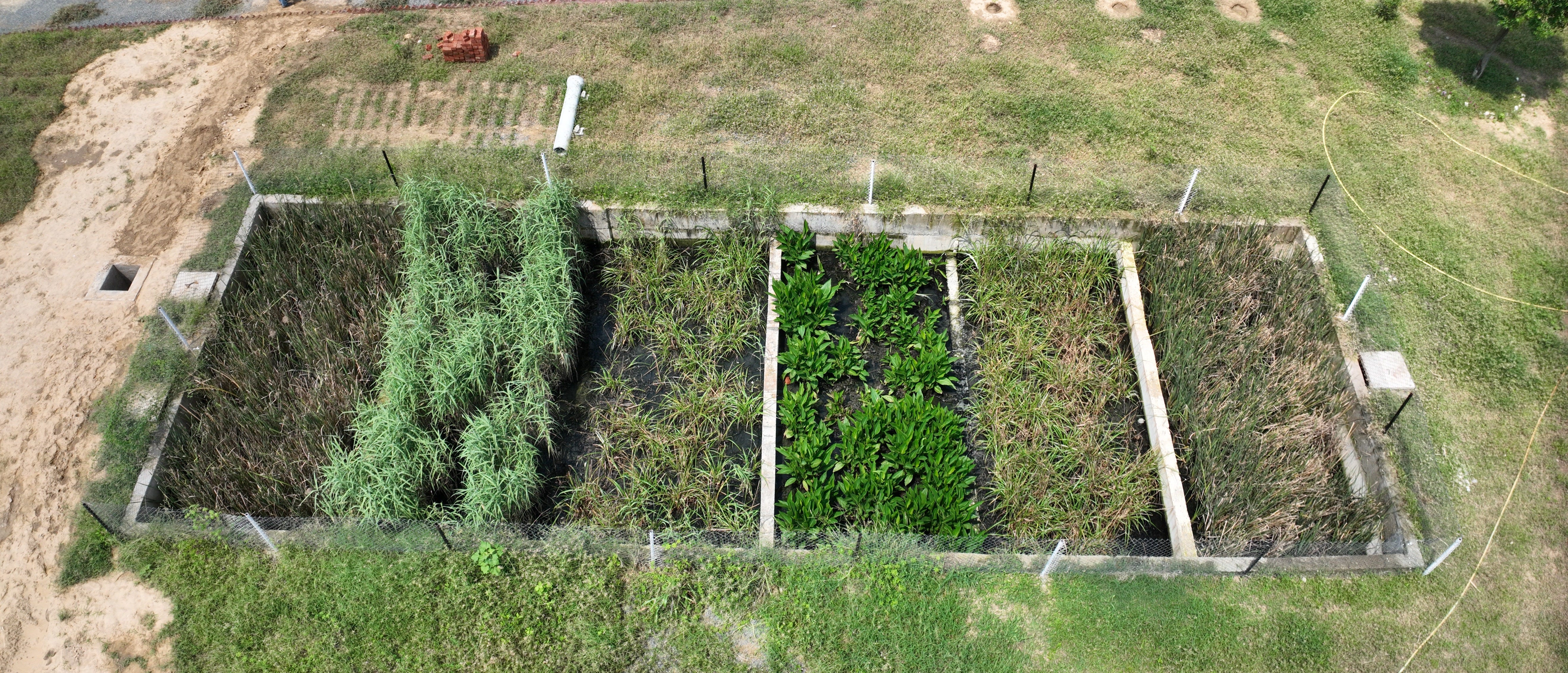
The science behind it is simple and replicable. A restored pond does two things at once: it treats water instead of dumping it, and it holds water long enough for the ground to drink it in. Roughly 59 million litres of wastewater a year — previously raw sewage pooling on the surface — now passes through a natural, plant-based treatment system before entering the pond. Add the monsoon runoff from the surrounding catchment, and the pond effectively recycles several times its own storage capacity annually, giving sandy, porous soils repeated opportunities to recharge the aquifer below. This is the core logic behind Catch the Rain — capture it, hold it, and let gravity do the rest.
Life Returns Before You Notice It
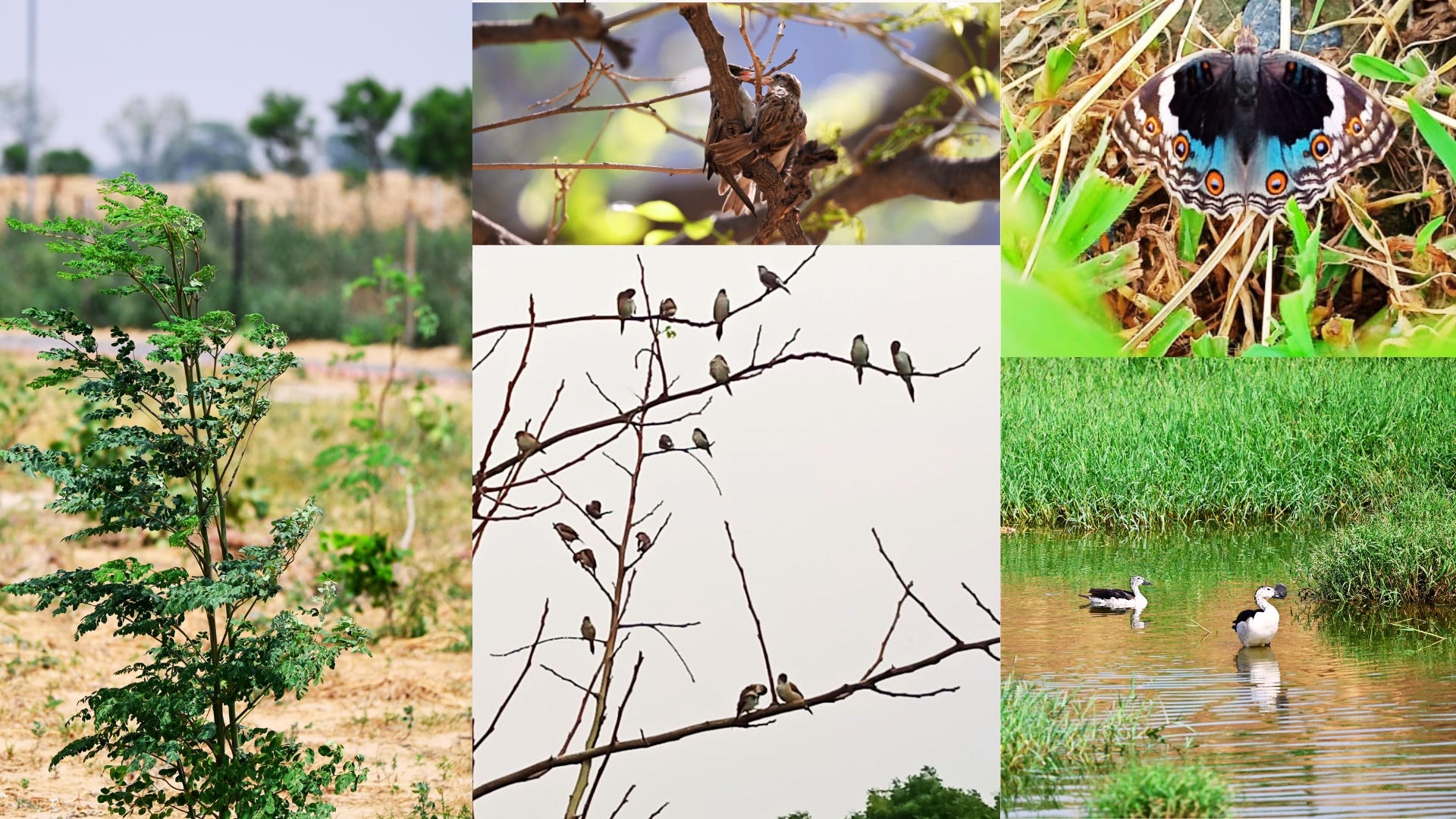
Groundwater recharge is invisible. Biodiversity is not. As the water cleared and the banks stabilised, the pond quietly became a habitat again. Over 1,100 native trees, shrubs and thousands of herbs and climbers now hold the soil and feed pollinators. Species like Red-wattled Lapwing, Pond Heron, White-breasted Waterhen and Common Myna have returned to a shoreline that once supported nothing but invasive water hyacinth. A wetland doesn’t just store water — it builds an entire food web on top of it, one native sapling and one insect at a time.
A Village, Reflected in Its Water
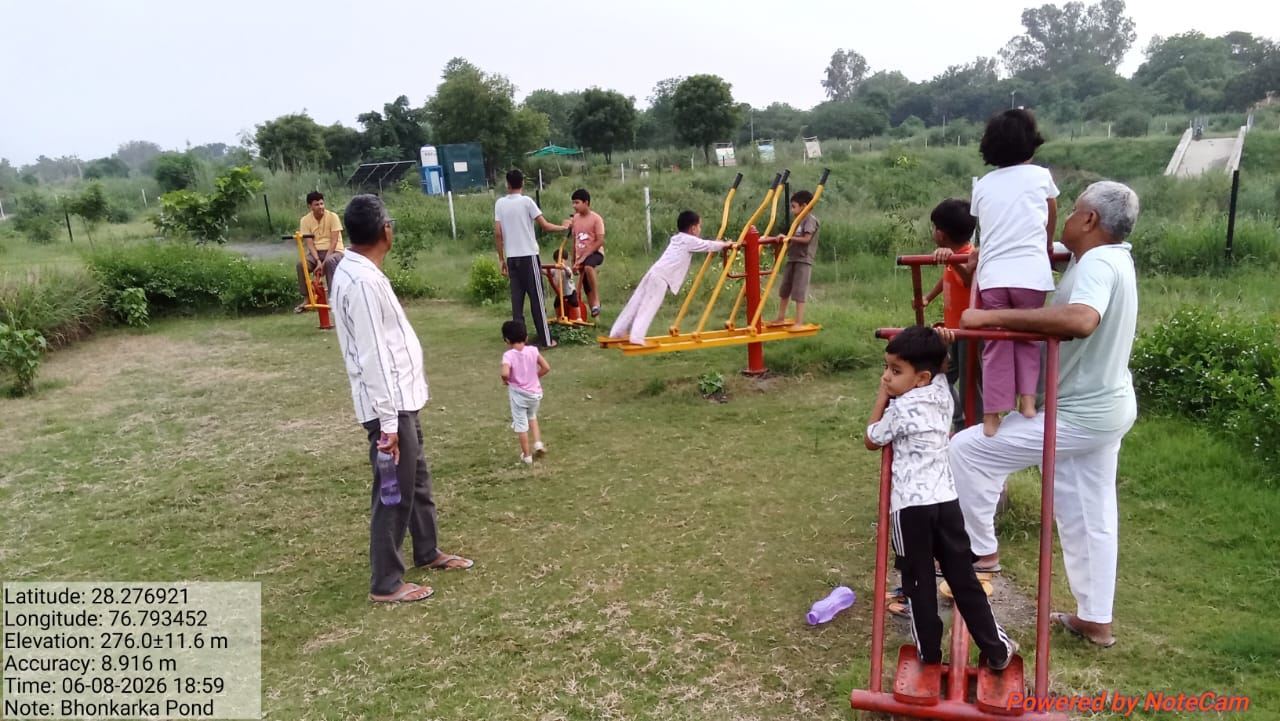
The most striking recovery, though, is human. A pond that no one visited is now a daily gathering ground for well over a hundred people a day — women meeting in the evenings, elders relaxing by a garden of tulsi and lemongrass, children on open-gym equipment their village never had before. Livestock now drink safely from a proper access ramp instead of eroding the banks. A community group has formed simply to keep the site alive. None of this was engineered separately from the water work — it happened because of it. Clean water, it turns out, is also a public square.
Why This Matters Beyond One Pond
For practitioners and for India’s Jal Shakti Abhiyan — Catch the Rain movement, this small pond is a working proof of concept: treat the wastewater, don’t just divert it; hold the runoff, don’t let it escape; plant natives, don’t just landscape; and let the community own the outcome, not just witness it. A 2.2-metre rise in one season, 59 million litres of water redirected from pollution to recharge, a returning bird list, and a hundred people an evening — these are not separate wins. They are one number, told four different ways: water saved is a village saved.